


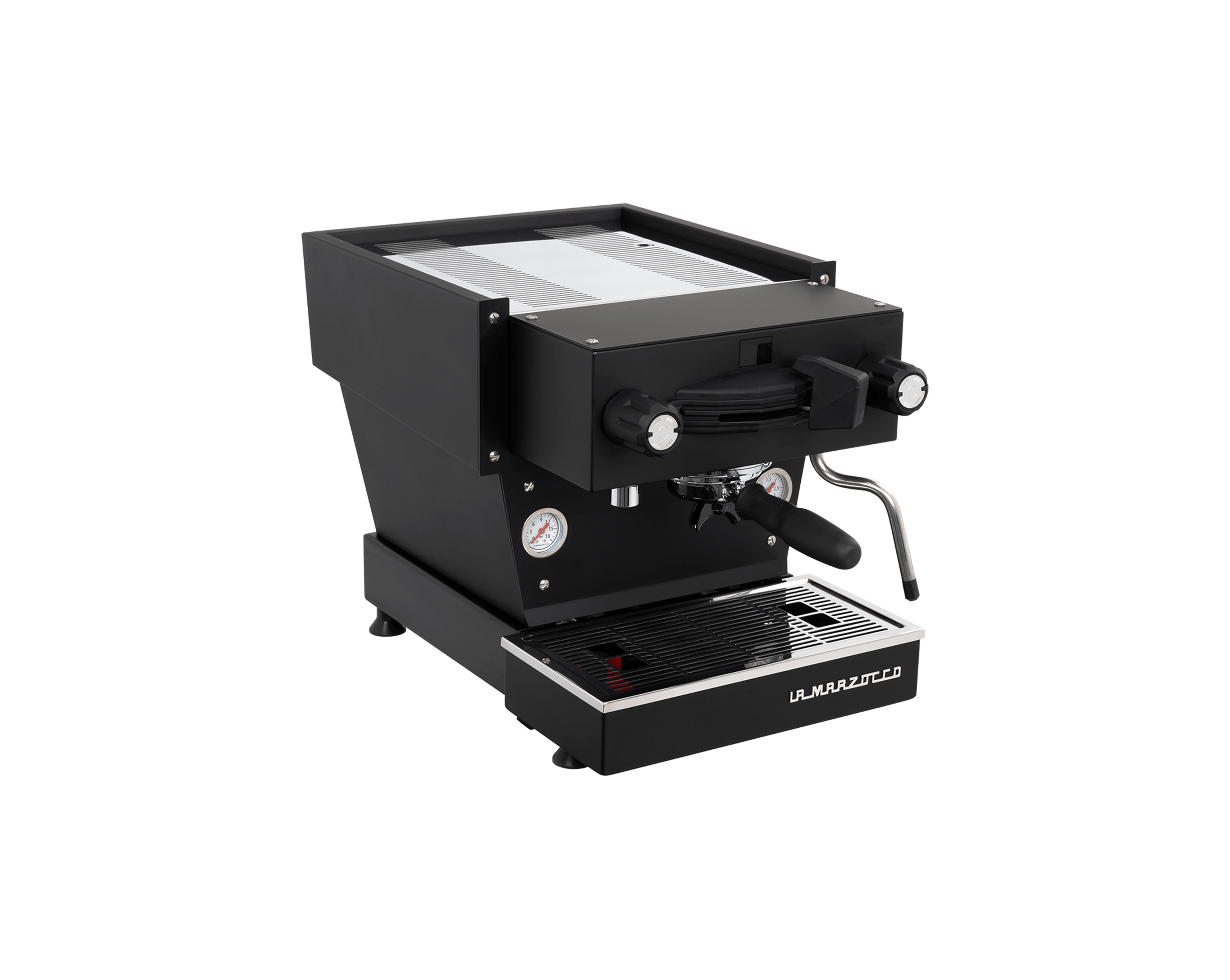

La Marzocco makes two of the most coveted home espresso machines on the planet. The Linea Mini and the Linea Micra both carry the legendary La Marzocco DNA — dual boilers, commercial-grade build quality, and that unmistakable Italian craftsmanship. But they sit at different ends of the home espresso spectrum, and choosing the wrong one is an expensive mistake.
This is the straight-up comparison you need before you buy.
The Quick Verdict
- Linea Mini — The full commercial experience, scaled for home. Bigger, heavier, more powerful. Built for the coffee obsessive who wants a machine that will last decades.
- Linea Micra — The modern, compact alternative. Smarter connectivity, smaller footprint, and a younger aesthetic. Built for the design-conscious coffee lover working with limited counter space.
At a Glance
| Feature | Linea Mini | Linea Micra |
|---|---|---|
| Boiler System | Dual Boiler | Dual Boiler |
| Brew Boiler Capacity | 250ml | 165ml |
| Steam Boiler Capacity | 1.5L | 300ml |
| Width | 35.4 cm | 28.4 cm |
| Weight | ~23 kg | ~8.5 kg |
| Connectivity | None (standard) | Bluetooth + App |
| Volumetric Dosing | Yes (manual & auto) | Yes |
| Hot Water Tap | Yes (dedicated) | Yes |
| Group Head | E61 (saturated) | Saturated group |
| Finish Options | Multiple (incl. custom) | Multiple |
The Boilers: Both Dual — But Very Different Sizes
Both machines run independent brew and steam boilers — this is the foundation of La Marzocco's commercial superiority. You can steam milk and pull a shot simultaneously, with no compromise on either temperature. This is where both machines leave everything in the prosumer category behind.
But the size gap is significant.
The Linea Mini's steam boiler holds 1.5 litres. The Micra's holds just 300ml. In practice, the Mini steams faster, produces denser microfoam more consistently, and recovers instantly for a second drink. The Micra is no slouch — it still outperforms any single-boiler or heat-exchanger machine — but if you're pulling back-to-back cortados at a dinner party, the Mini has more headroom.
Counter Space & Weight: The Micra Wins Decisively
This is where the Micra was designed to win. At 28.4cm wide and 8.5kg, it fits neatly into a kitchen without dominating it. The Linea Mini is a full 35.4cm wide and weighs north of 23kg — it commands counter real estate like the commercial machine it was inspired by.
For most UAE apartments and kitchens where counter space is measured carefully, the Micra is the realistic choice. The Mini needs to be a deliberate decision to make it the centerpiece of your kitchen.
The App & Connectivity: Micra Plays the Modern Game
The Linea Micra connects to the La Marzocco Home app via Bluetooth. This gives you remote temperature control, shot timer, dose programming, and usage statistics from your phone. For a generation that controls everything from a screen, this feels natural.
The Linea Mini (in its standard configuration) is analogue — no app, no connectivity. You dial in your machine the old-fashioned way: by pulling shots, adjusting, and tasting. Purists argue this is the right way. The app is not available on the standard Mini, though the newer LM editions have started to evolve this.
Neither approach is wrong. One feels more like a craft tool. The other feels like a smart appliance. Know which one you are.
Build Quality & Longevity
Both machines are built in Florence, Italy, with the same commercial-grade components that go into La Marzocco's café equipment. The stainless steel group heads, solid boilers, and heavy-duty frames are designed to outlast every other machine on the market by a decade.
The Mini, by virtue of its larger boilers and more robust steam system, has a slight edge in long-term steam performance. The Micra, being newer, benefits from updated internal engineering — but its smaller steam boiler will work harder during heavy use.
Either machine, properly maintained, should run for 15–20+ years without major issues. This is not a machine you replace every five years — it is a machine you hand down.
Espresso Quality: Essentially Identical
Here is the honest answer: the cup quality between these two machines is essentially indistinguishable to all but the most experienced palates. Both use saturated group heads, both maintain precise brew temperature via independent boilers, and both produce the thermal stability that La Marzocco is famous for.
The differences that exist are at the margins — the Micra's smaller brew boiler recovers slightly slower during extreme volume, and some users report minor temperature variance during prolonged back-to-back sessions. Under normal home use, neither machine will be the limiting factor in your espresso quality. Your grinder and technique will always be the bottleneck long before the machine is.
Who Should Buy Each
Buy the Linea Mini if:
- Counter space is not a constraint and you want a machine that makes a statement
- You pull a high volume of drinks — family of 4+, or regular hosting
- You want maximum steam power for high-speed, high-quality milk texturing
- You prefer a purely analogue, hands-on experience
- You want a machine that appreciates in perceived value over time
Buy the Linea Micra if:
- Counter space is limited but you refuse to compromise on quality
- You want app-based control and smart integration
- You are a 1–2 person household pulling 2–4 drinks per session
- Design and aesthetics matter to you as much as performance
- You want the La Marzocco experience without the physical commitment of the Mini
The Bottom Line
There is no bad choice here. Both machines will produce world-class espresso, outlast everything else on your counter, and make you a better barista for owning one. The decision comes down to how you live and how you work.
The Linea Mini is a lifetime machine that fills a room. The Linea Micra is a lifetime machine that fits your life. Both are available at BeanBurds — and if you are deciding between them, come talk to us. This is exactly the kind of decision we exist to help you make.
Browse La Marzocco machines at BeanBurds — UAE's home for specialty coffee equipment.
0 comments